Ajrakh is easy to recognise once you have seen it: deep indigo and madder red, small repeating geometric patterns, and a depth of colour that looks almost mineral. It is also one of the most patient printing traditions in India.
What ajrakh is
Ajrakh is not a weave. It is a block-printing process, traditionally from Kachchh in Gujarat and from Sindh. As Teevra describes it in its craft guide, it takes sixteen steps and uses natural dyes such as indigo, madder and pomegranate. Each colour is a separate printing pass.
How it is made
- The cloth is prepared and washed before any colour touches it.
- Carved wooden blocks are pressed onto the cloth by hand to print the pattern.
- Colours go on in stages, one pass at a time, with the cloth dyed and washed between steps.
- The process takes days, which is why real ajrakh is not quick or cheap.
How to recognise the real thing
- Turn the cloth over. In real ajrakh the colour goes through, and the back is nearly as deep as the front.
- Look for tiny irregularities where blocks meet. They show a human hand.
- Natural dyes look rich and slightly uneven, not flat and bright.
- A very low price for “ajrakh” usually means a screen print made to imitate it.
What to expect when you wear it
- Some colour may bleed in the first two or three washes. This is normal with natural dyes.
- Natural dyes age beautifully and soften with use.
- Strong sun can fade them, so dry in shade.
Looking after ajrakh
- Wash the first time on its own, in cold water with a spoonful of salt.
- Dry in shade, not in direct sun.
- Wash gently afterwards, and keep it away from strong detergents, and check the label first.
The colours
Traditional ajrakh uses natural dyes. As Teevra’s guide notes, indigo gives the blues, madder gives the reds, and pomegranate is used as well. The colours deepen and soften with age.
Ajrakh and other block prints
Bagru, from Rajasthan, is another well-known block-printing tradition. It uses a mud paste to resist the dye, and its palette is earthy and slightly faded. Ajrakh is usually more geometric, with colours added one pass at a time. Both are made by hand and both show small irregularities.
How to wear ajrakh
- Wear one print at a time and keep the rest plain.
- Layer a solid jacket over an ajrakh dress, or an ajrakh jacket over a solid kurta set.
- Neutral shoes and simple jewellery let the pattern speak.
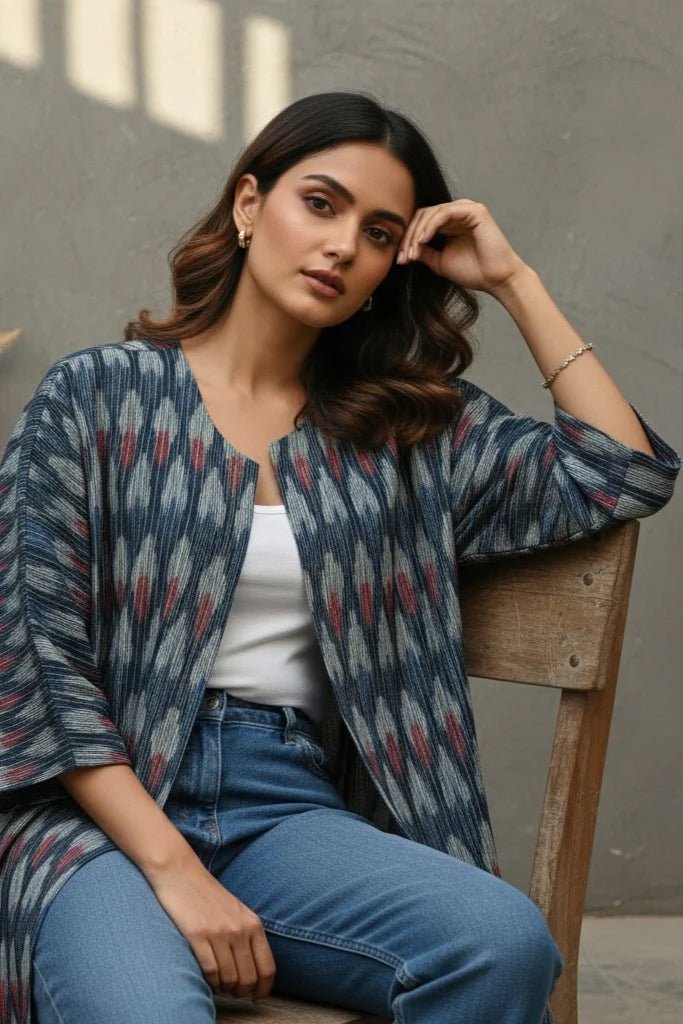
- It looks good with plain denim for an everyday outfit.
Questions to ask when you buy
- Is it dyed with natural dyes?
- Is it hand block printed, or screen printed?
- Where was it made?
- How should I wash it?
Ajrakh in our pieces
We use ajrakh prints on dresses, kurta sets and jackets. The product page describes each piece, and you can ask us on WhatsApp how it was printed before you buy.
-
Sale!
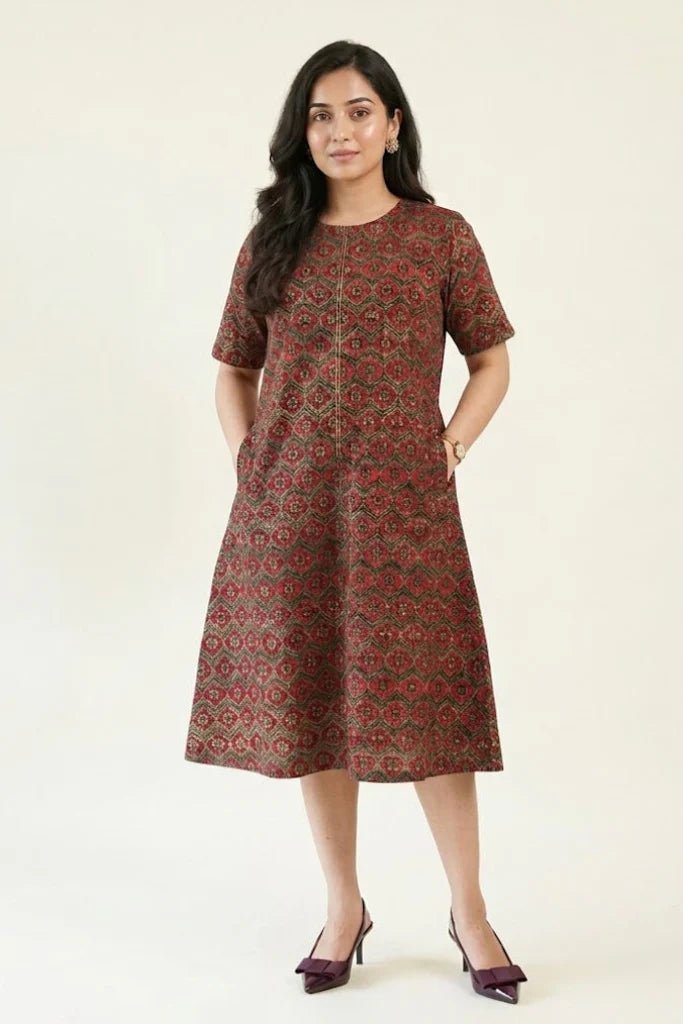
Ajrakh Linen A-Line Dress Ellie
Original price was: ₹5,000.₹3,750Current price is: ₹3,750. Select options This product has multiple variants. The options may be chosen on the product page -
Sale!
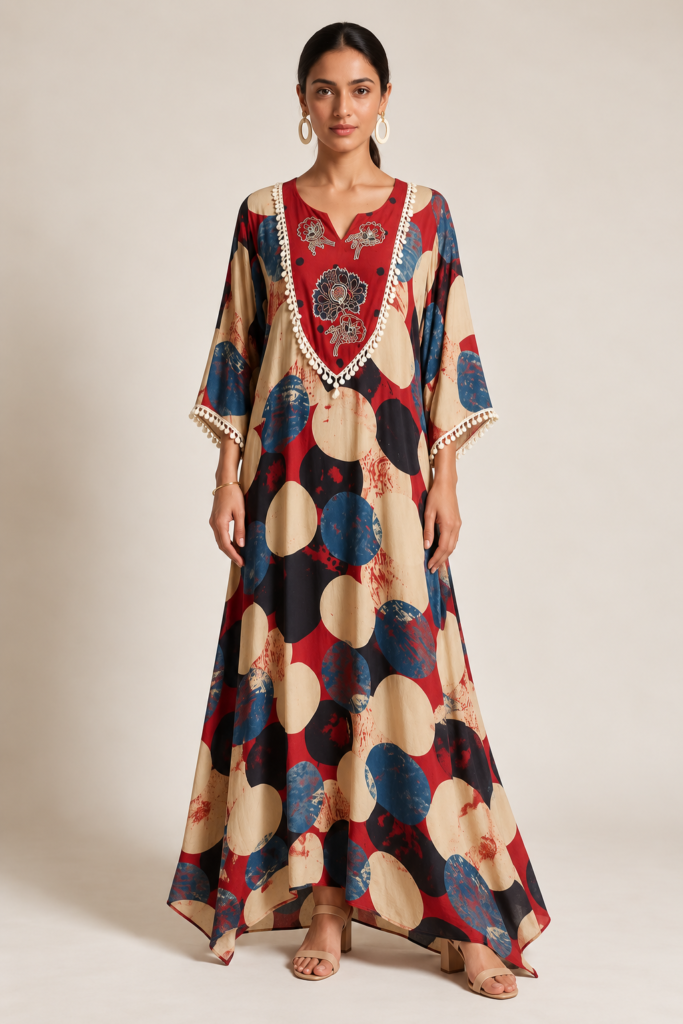
Modal Silk Ajrakh Maxi Dress Juliette
Original price was: ₹6,000.₹4,500Current price is: ₹4,500. Select options This product has multiple variants. The options may be chosen on the product page -
Sale!

Ajrakh Modal Silk Kurta Set Naomi
Original price was: ₹5,500.₹4,125Current price is: ₹4,125. Select options This product has multiple variants. The options may be chosen on the product page
For a deeper guide to the craft, see Teevra’s The Craft, or read our fabric guide.