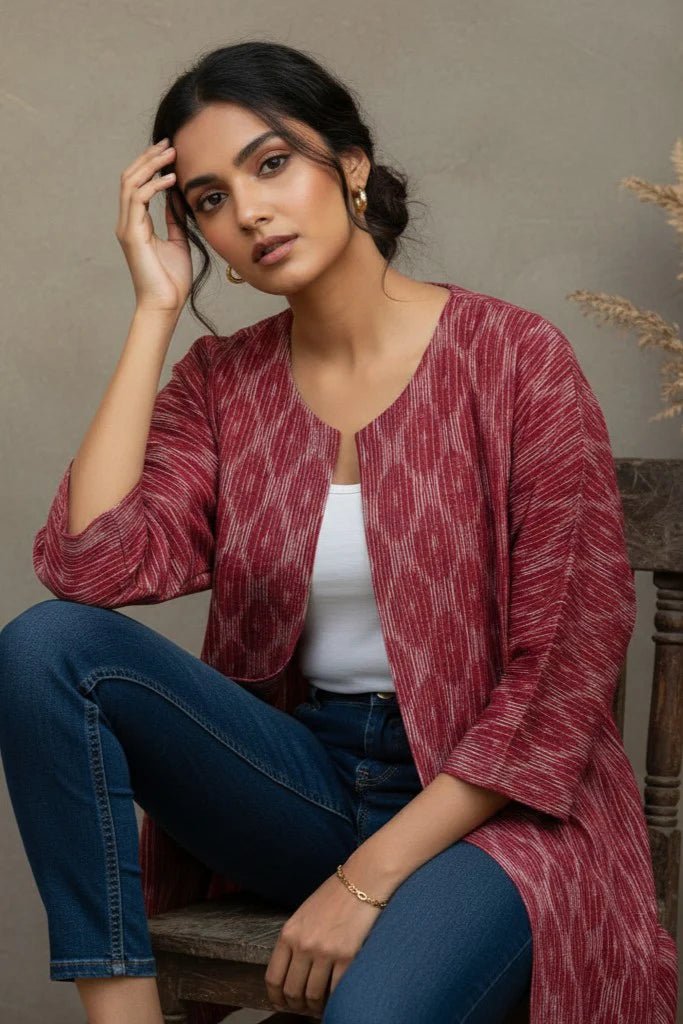
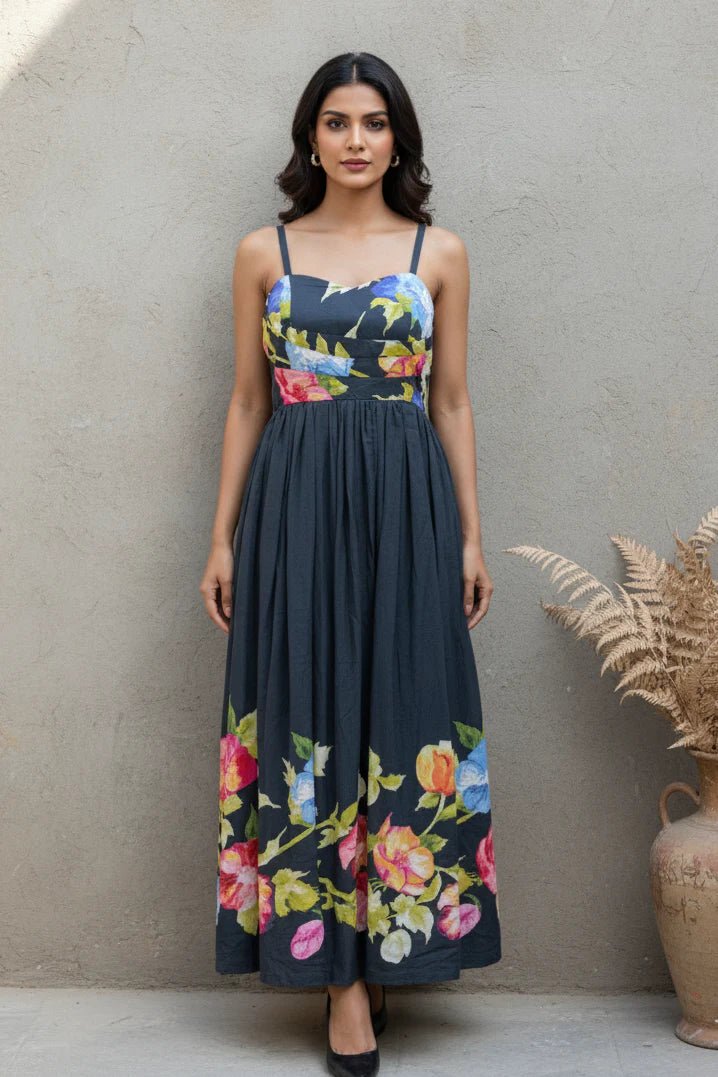
Diwali dressing is a negotiation between sparkle and comfort. You will sit on floors, lean in for long hugs, carry diyas, and eat more than you planned. The outfit has to survive all of it and still feel like an occasion. That is why we begin with fabric, not colour.
Start with how the evening will go
Ask three questions before you open the wardrobe. Will you be sitting on the floor for puja? Is dinner indoors or on a terrace? How late does it run? Your answers decide the cloth: something that breathes for a long day at home, something with body for a party, something light you can layer when the night cools.
Three outfits, three fabrics
1. The long puja morning: cotton
Breathable, forgiving and softer with every wash. Choose a relaxed kurta set in a warm colour and keep the jewellery simple. You will not think about it once. See Gamcha Patchwork Kurta Set Aura.
2. The family dinner: Ajrakh velvet
Deep indigo and madder-red block prints look rich under lamplight, and velvet adds the weight that makes an outfit feel festive without a single sequin. See Blue Ajrakh Velvet Kurta Set Iris.
Festive does not have to mean heavy.
3. The terrace party: modal silk
Fluid, light and made to move. A modal silk dress takes you from the first greeting to the last dance, and a kantha jacket over the shoulders handles the evening chill. See Modal Silk Shibori Dress Asymmetric Tori.
What goes with what
- Ajrakh velvet kurta set: gold jhumkas, flat juttis, a plain potli
- Modal silk dress: kantha jacket, oxidised silver, block-heel sandals
- Cotton set: lightweight dupatta, kolhapuris, a single cuff
Keeping it looking good
Festive clothes are worn a few times a year, which makes how you store them matter. Steam instead of ironing delicate fabrics, wash dyed pieces separately the first time, and fold rather than hang anything heavy. See our fabric guide for details on each cloth.