Handloom is often called a dying art. Weavers do face pressure from machines and from cheap copies. But the more useful thing to say is that handloom is still woven, every day, by people who make their living from it. How long that continues depends partly on what the rest of us choose to buy.
What handloom actually means
Handloom cloth is woven by a person, on a loom worked by hand. As our sister brand Teevra explains in its guide to Indian weaves, a weaver passes the shuttle through the threads by hand, one piece at a time. A six-yard saree can take anywhere from a few days to several months on the loom, depending on the weave.
Handloom and powerloom
Powerloom cloth follows the same basic principle, but the loom runs on an electric motor and one operator can look after several. It is faster, cheaper and more uniform. That is not wrong in itself, and it makes everyday cloth affordable. It becomes dishonest only when powerloom cloth is sold as handloom, at handloom prices.
How to spot handloom
- Small irregularities in the weave. These are the mark of a human hand, not a flaw.
- The back of the cloth looks as deliberate as the front.
- The edges (the selvedge) are woven, not cut.
- It may carry the India Handloom Mark, or a GI tag for the weaves that have one.
- It costs more, because it took longer.
Why it matters
Every handloom piece you buy keeps a weaver working and a skill alive. Skills like these are learned over years, inside families and communities, and they are hard to rebuild once they stop. The cloth itself is worth it too: breathable, textured and long-lasting.
Labels, certification and the weaver behind the cloth
Teevra’s guide to telling real handloom from imitation makes a few points worth repeating here. The India Handloom Mark is a meaningful signal when it is present and can be verified, but it is not on every genuine piece. Certification costs money and paperwork, which many small weavers selling directly cannot easily manage, so a missing mark does not mean the cloth is not handloom. The reverse is also true: a high price proves nothing on its own, because markups happen at every step whatever the cloth is made of.
The most useful question is the simplest one: ask for the loom, not just the label. A seller who can tell you which weaving cluster a piece came from, and roughly how long it took, is giving you a very different answer from one who only has a product photo. And powerloom cloth is not bad cloth. It is durable and affordable. The problem is only when it is sold as handloom, at handloom prices, without saying so. Read the full guide on Teevra: Real handloom saree, or clever fake?
How to buy handloom well
- Ask who wove it and where. A real seller can tell you.
- Look for the signs above, and check the back of the cloth.
- Expect to pay fairly. Very cheap “handloom” is rarely handloom.
- Buy fewer pieces and look after them.
- For a deeper guide to twelve Indian weaves, read Teevra’s The Craft.
From yarn to cloth
Before weaving begins, the yarn is prepared and the loom is set up with the lengthwise threads. This preparation can take a long time, sometimes as long as the weaving itself, which is part of why handloom is slow.
Handloom weaves you may meet
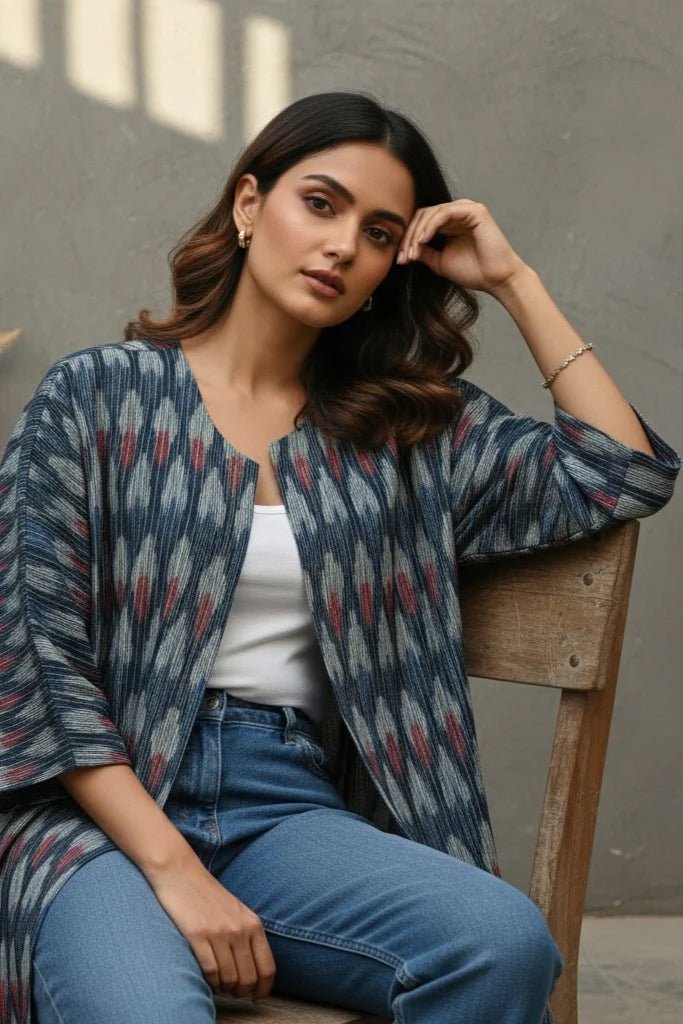
- Ikkat: the yarn is tied and dyed before weaving, so the pattern looks softly blurred at the edges.
- Chanderi: lightweight, with a delicate texture and a subtle sheen.
- Jamdani: very fine muslin with patterns woven into the cloth, from Bengal.
- Kanjivaram: heavy temple silk from Tamil Nadu.
Handloom is not only for sarees
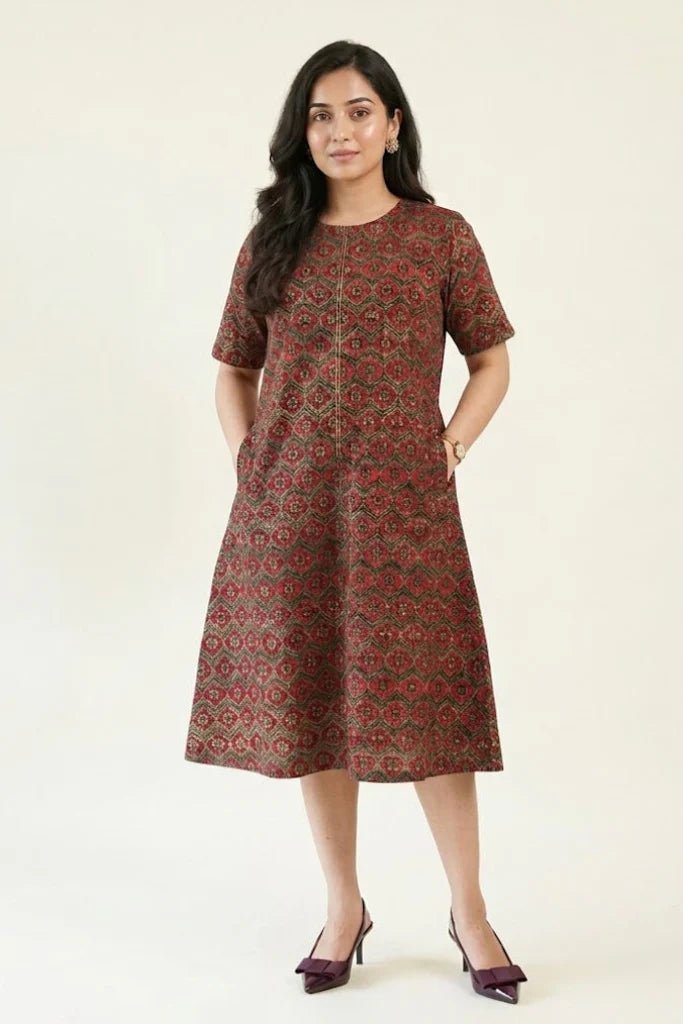
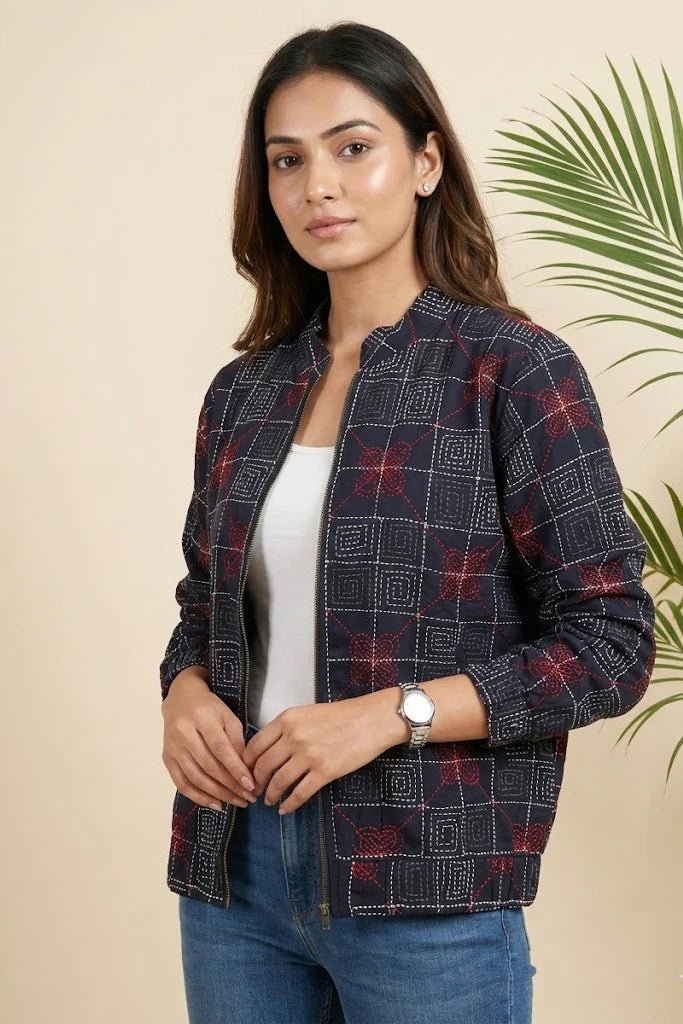
Handloom cotton and ikkat are woven as cloth, so they can be cut into jackets, kurta sets and dresses just as well as sarees. The texture suits modern, simple shapes.
A few myths
- “Handloom is scratchy.” It depends on the yarn and the weave. Many handloom cottons are very soft.
- “Handloom is only for special occasions.” Handloom cotton is made for everyday wear.
- “Handloom needs special care.” Most pieces need only gentle washing and drying in shade.
Why it costs what it costs
A handloom piece pays for time, skill and fair wages for the person who made the cloth. When the price looks very low, ask what has been left out.
Handloom in our pieces
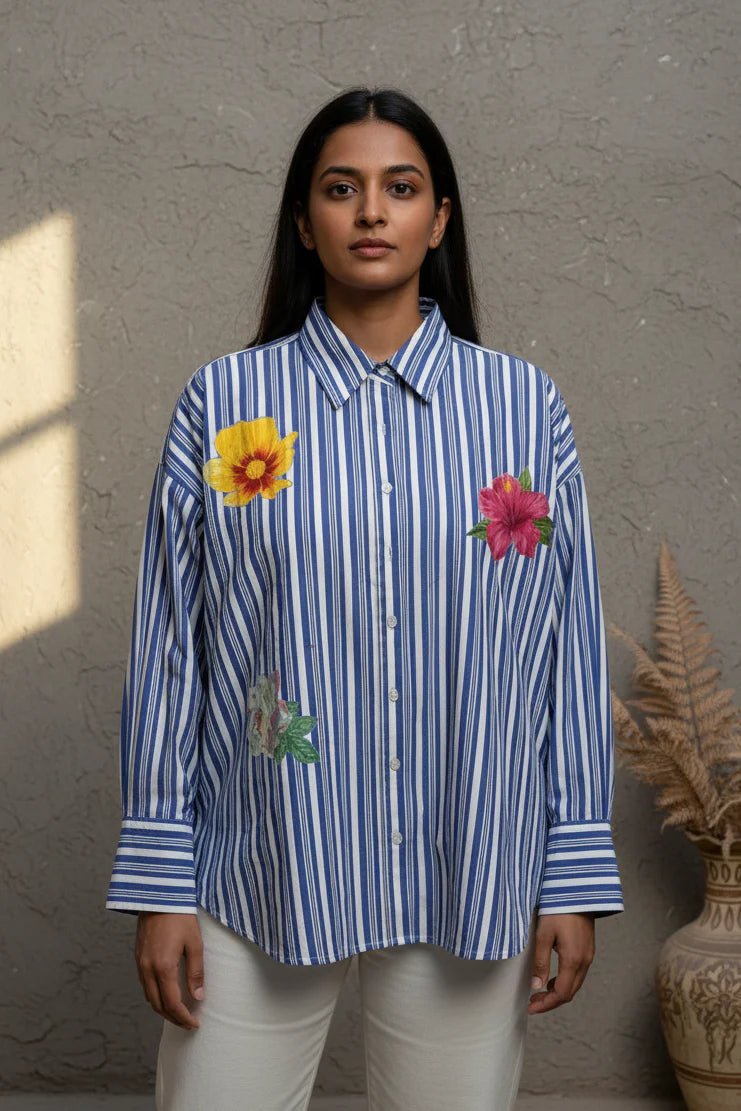
Some of our pieces are made from handloom cotton and ikkat. Several of our jackets, kurta sets and dresses are made from handloom cotton and ikkat, and the product name says so. If you would like to know more about a piece, ask us on WhatsApp.
-
Sale!
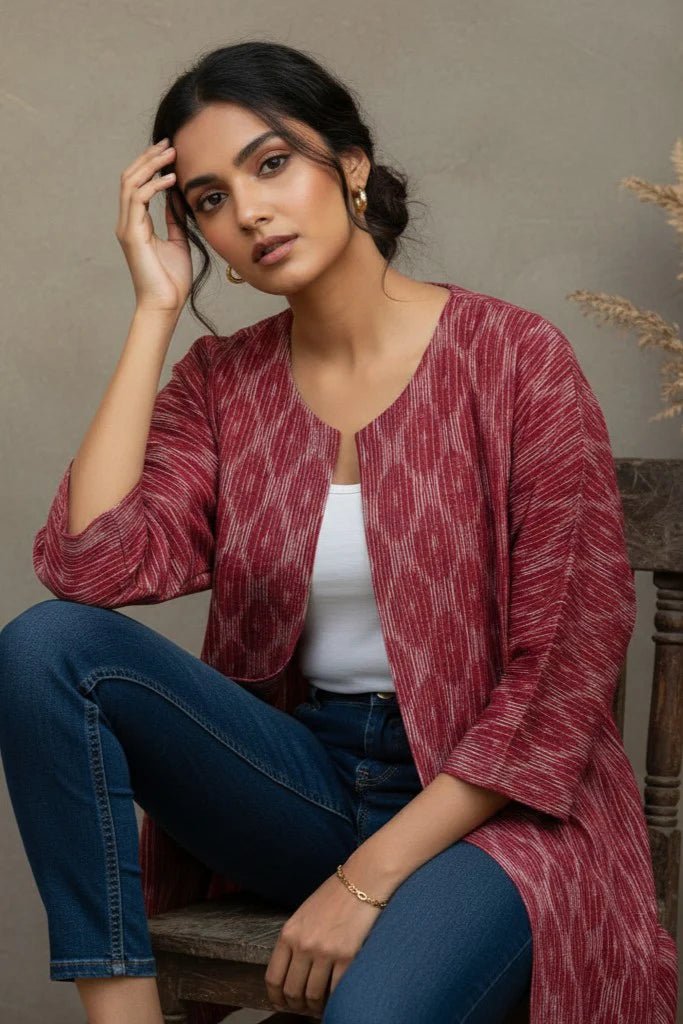
Maroon Ikkat Cotton Jacket Vivian
Original price was: ₹4,500.₹3,375Current price is: ₹3,375. Select options This product has multiple variants. The options may be chosen on the product page -
Sale!
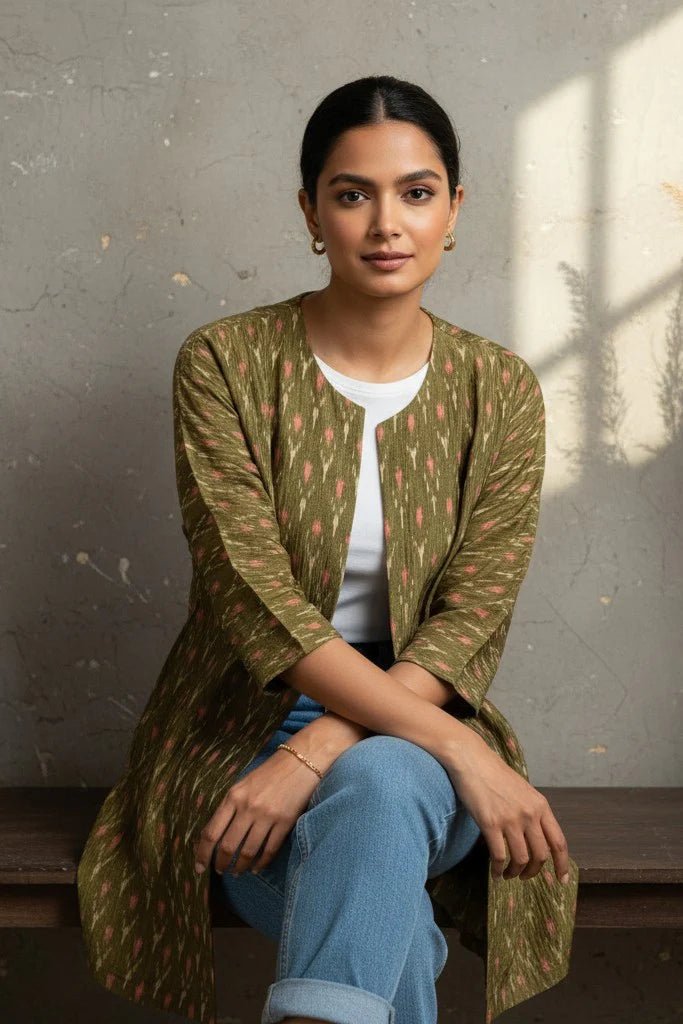
Ikkat Cotton Jacket Elle
Original price was: ₹4,500.₹3,375Current price is: ₹3,375. Select options This product has multiple variants. The options may be chosen on the product page -
Sale!
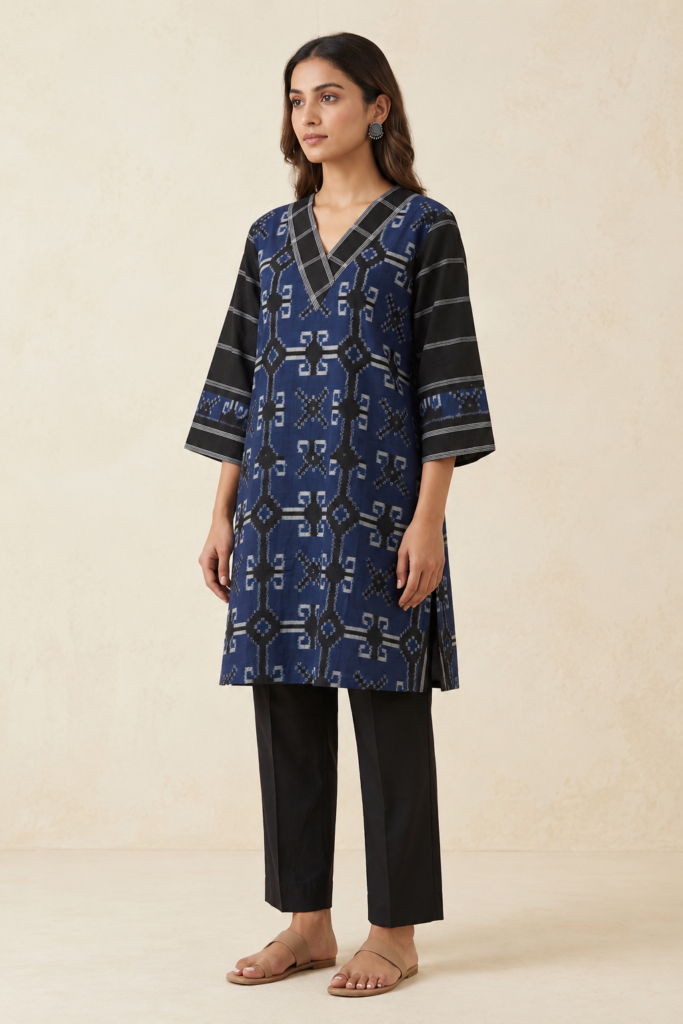
Handloom Ikkat Cotton Contrast Kurta Set Asla
Original price was: ₹4,500.₹3,375Current price is: ₹3,375. Select options This product has multiple variants. The options may be chosen on the product page
See also our fabric guide and how to care for handloom, block-print and velvet pieces.